(1) After powder coating goes through the full spray coating process and large oven curing, the powder coating strip may wrinkle and become uneven (see Figure 3 109). This generally occurs with thermoplastic powder coatings. Thermoplastic powders have a low melting point, and during the curing of the full spray coating, they may remelt before fully curing. Due to differences in thermal expansion coefficients between the coating powder and the full spray coating, shrinkage occurs during curing, forming wrinkles.
Solution: Appropriately reduce the oven temperature for the full spray coating to minimize the secondary melting of the thermoplastic powder. If this does not solve the problem, use another type of powder coating that contains thermosetting components, which increases the melting point and prevents secondary melting。
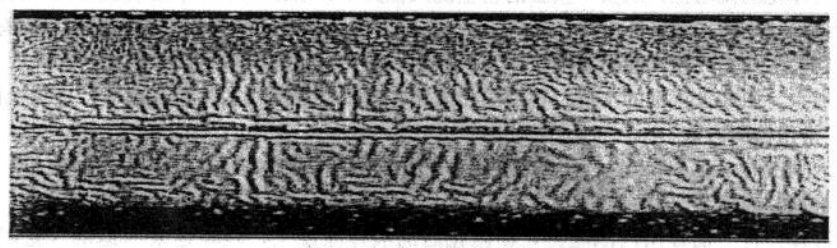
Figure 3‑109 Wrinkling of Powder Coating Strip
(2) After rolling and flanging, the powder coating strip cracks (see Fig. 3‑110). The cause is insufficient elasticity of the coating strip. Solution: For thermoplastic coatings, overbaking may occur; appropriately reduce the baking temperature or shorten the baking time, and accelerate cooling after curing to increase the elasticity of the coating strip. For thermosetting powder coatings or coatings with a high content of thermosetting components, appropriately increase the temperature to improve the adhesion of the coating strip.
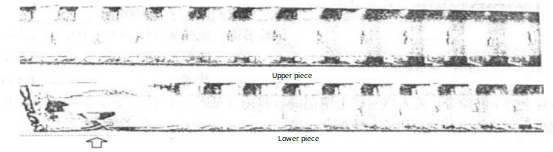
Figure 3‑110 Cracking of Powder Coating Strip After Rolling
After baking and curing thermoplastic powder coating, if the peel test shows excessive coating delamination (see Figure 3‑111), exceeding 5 mm, or if the adhesion test of thermosetting coating is poor, the baking and curing temperature should be increased to improve the adhesion of the coating strip.
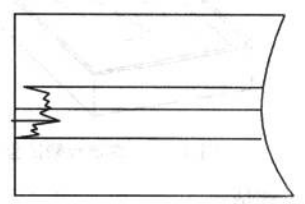
Figure 3‑111 Peel Test Showing Excessive Coating Delamination Over 5 mm Due to Insufficient Curing Temperature
Additionally, if after curing the powder coating layer exhibits very poor adhesion and large sections peel off from the overlapping areas with the primer (yellow-coated tinplate), increasing the curing temperature will not help. This may be caused by excessive wax in the primer’s solvent. During baking, the wax can migrate and precipitate on the primer surface, reducing the adhesion of the powder coating. The solution is to improve the primer solvent, or before powder coating, wipe the weld coating area with a strong organic solvent to remove the wax layer and improve adhesion.
(4) Before baking and curing the powder coating, the powder strip may be uneven or slightly wrinkled, especially when used with low-speed welding machines. This phenomenon is caused by excessively high charging voltage, leading to repulsion between powder particles. The solution is to appropriately reduce the electrostatic high voltage. Additionally, using powder stored for too long (well beyond the supplier’s shelf life) can also cause this issue.
(5) After powder coating and before baking, powder may fall onto the can walls from the conveyor. Increasing the electrostatic voltage can improve powder adhesion. Also, check whether the cans experience collisions, shaking, or bouncing during transport, and try to ensure smooth movement to reduce powder loss.
(6) After powder is sprayed, the coating may become thin, sometimes accompanied by vibration. This is usually due to a clogged powder spray tube. Clear the tube promptly or replace it with a new one. When installing the powder tube onto the welding arm, ensure it does not touch the copper wire guide roller and that it operates at room temperature; otherwise, melted powder may clog the tube and be very difficult to clear.
(7) The powder coating at both ends of the can may be too thick, affecting the subsequent seaming process. Reduce the coating thickness or increase the suction at the external powder extraction port on the OHC to thin the coating at the ends.
(8) When powder coatings are stored long-term or repeatedly recycled during production, their properties may change, such as charging ability, flowability, and contamination by dust. Attention must be paid during production. Powder coatings generally contain a small amount of moisture (0.6%–0.8%) to improve flowability. If moisture is lost, the powder can become clumpy and appear damp. Moisture content should be tested, and if it is too low, water should be added to restore normal levels. Follow the methods and parameters provided by the powder supplier for proper operation.